
The Impulse to Care
The GodmotherAcross children, friends, animals, and former partners, the novel tests whether care can be freely given without becoming control, duty, or self-erasure.
increasing Bearing strength in each event
 decreasing
Bearing strength in each eventdecreasingRachel as Everyone’s Adviser

Rachel as Everyone’s Adviser
Rachel routinely helps friends navigate family difficulties, while rarely revealing the uncertainties of her own life.
A Familiar Position
Listening gives her a valued role and keeps attention focused on problems she can analyze. Her friends depend on her clarity, and she is accustomed to being the reliable one.
The Cost of One-Way Care
Rachel recognizes that being needed is easier than asking for support. Her growing desire to confide suggests that care must include vulnerability to become truly reciprocal.
Care for Anita Without Rescue

Care for Anita Without Rescue
Rachel tries to help Anita through drinking and marital difficulties while struggling to distinguish support from interference.
Compassion and Frustration
She wants Anita to recover, but is tired of handling crises that Anita minimizes. Their friendship is strained by the difference between offering help and taking responsibility for another adult’s choices.
Boundaries Matter
Rachel cannot make Anita stop drinking or force Giles to seek care. The limits of rescue become clearer as Rachel learns to speak honestly without pretending she can control the outcome.
Will Helps a Stranger

Will Helps a Stranger
Will finds Polly sleeping on the steps outside Rachel’s building and takes her to his flat for warmth and shelter.
Practical Mercy
He offers a bed, a shower, a telephone, and breakfast without demanding intimacy. His response grows from concern for a vulnerable stranger, not from a desire to control her.
Care Has Limits
Will listens to Polly but cannot resolve her attachment to Robbie. His kindness gives her safety for a night, while she later uses what she learns to deceive the people around her.
Care for Children, Freely Chosen

Care for Children, Freely Chosen
Rachel spends unhurried time with Jessica and Leo, discovering enjoyment in play, conversation, and ordinary acts of attention.
Beyond Obligation
Her relationships with the children are not a substitute for parenting, but they are meaningful in their own right. Rachel can be affectionate without pretending to know whether she wants a child herself.
A Broader Family Circle
Godmotherhood becomes a chosen form of involvement. The novel values sustained attention as a form of kinship that need not depend on biology or a conventional household.
Care Without Taking Over
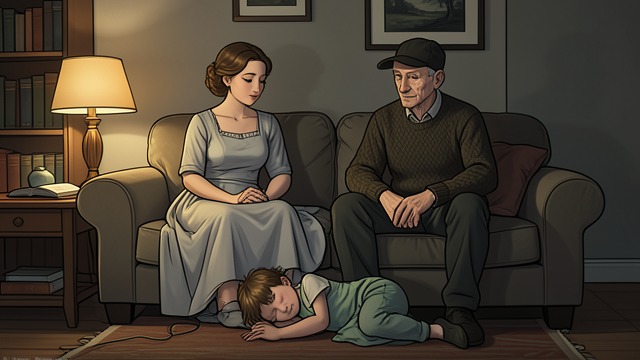
Care Without Taking Over
Rachel returns to Will’s home after her car fails, and the evening includes a phone call and a bedtime story for Jack.
Ordinary Intimacy
Will and Rachel share space with a child, food, and a disrupted night without turning the moment into a grand promise. The small acts make closeness practical rather than abstract.
Agency Preserved
Rachel chooses to return, while Will has already told her the truth about his infertility. Their possible relationship begins with room for uncertainty and the freedom to decide together.
During the early autumn workday
During Anita’s drinking episodes in winter
On a cold Wednesday night in late winter
During Rachel’s visits with Jessica and Leo
At the final dinner with Will and Anna’s family
